
What is Zero Waste?
We live our lives within a badly designed materials system, depicted by a linear economic model. In this model, scarce resources are extracted, manufactured, packaged, sold, used (often briefly) and then discarded.
One of the main myths sustaining this model is the simple idea that there is such a thing as “away”. Deceptive words like, “waste” would have you believe that our materials are designed with a natural ending encoded into them, but they are not. The materials we toss aside so conveniently, are durable. They are so durable that they pose one of the largest and most costly problems our governments, civil societies and natural ecosystems must face today. We’re producing more waste than available disposal methods can handle, leading to the rapid depletion of landfill space, increased pollution, and strained waste management systems. The unfortunate truth is that recycling is not the answer to this problem. Recycling is itself an expensive and incomplete endeavour.
Being the industrious and persistent species human beings are, another solution has been developed. “Zero waste” is an ambitious goal defined best by the Zero Waste International Alliance:
“The conservation of all resources by means of responsible production, consumption, reuse, and recovery of products, packaging, and materials without burning and with no discharges to land, water, or air that threaten the environment or human health.”
The concept of Zero Waste was designed to help us see the materials we come across for the resources they are. A rich and active value chain has been experienced by every one of the simple consumable items that pass through your hands.
The Zero Waste hierarchy is a helpful graphic that can teach us to prioritise our approaches to dealing with our earth’s resources. According to our experts, recycling is only the fourth port of call.
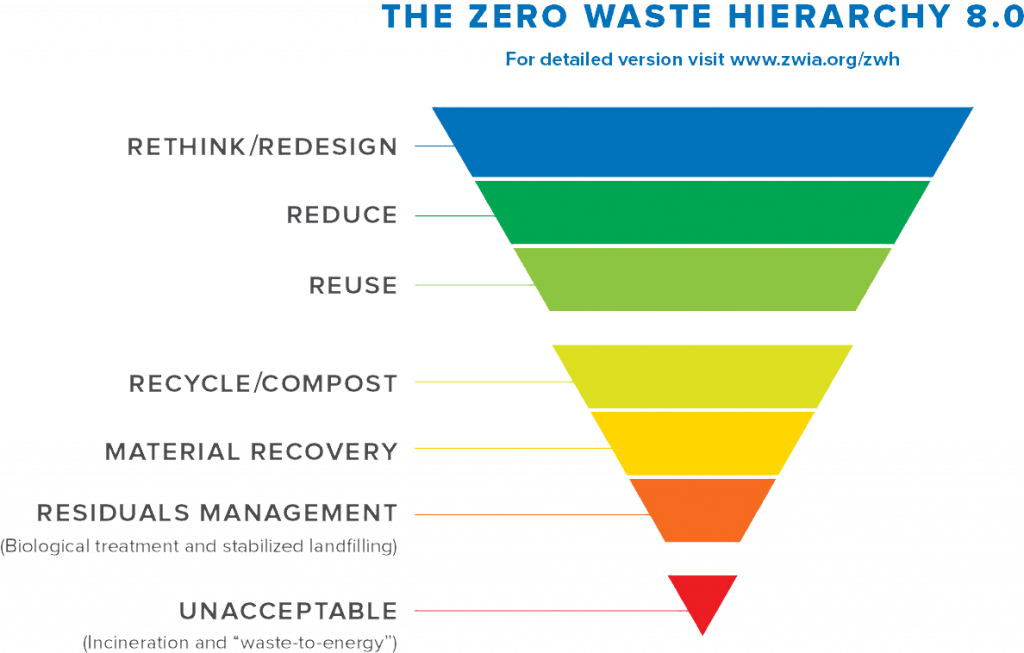
Rethink/Redesign: The first thing we need to do is shift toward a closed-loop model. Instead of just dealing with the aftermath of our linear way of using materials, we need to dig deeper and tackle the root causes of the problem. By creatively revamping our systems, we can solve the problem of waste far more effectively and sustainably.
Reduce is about taking action to cut down on the amount and toxicity of resources, products, packaging, and materials we use, along with minimising their negative impacts on the environment and our health. While the focus is on reduction, it’s important to remember that everyone has basic needs that should be met—so not everyone will need to reduce in the same way.
Reuse: This is all about reusing products or their components for the same or similar purposes they were originally designed for. It’s about finding ways to keep using items in a way that maintains their value, usefulness, and functionality.
Recycle/Compost: This involves taking discarded items and either mechanically transforming them into new products or materials, or biologically breaking them down to enrich the soil. It’s a way to give waste a new lease on life and support a healthier ecosystem.
Material Recovery: This refers to efforts aimed at recovering extra materials after previous processes, excluding practices like energy recovery or transforming materials into fuels (these methods aren’t considered acceptable because they don’t align with the goal of true material recovery).
Residuals Management: This involves responsibly managing waste materials to ensure they don’t harm the environment or public health. It’s about examining what was discarded and understanding the reasons behind the waste.
Unacceptable: These are systems and policies that promote wastefulness and pose risks to both the environment and public health. Such practices include waste incineration and other similar waste-to-energy processes that create pollution.
This hierarchy can (and has) informed policy makers, private industry, and communities in steering our human societies away from a linear model of consumption towards a circular one. A circular economy is a model designed to minimise waste and make the most of resources by keeping products, materials, and resources in use for as long as possible. It emphasises regeneration, restoration, and recycling to create a sustainable system that benefits businesses, society, and the environment. The Ellen MacArthur Foundation wrote the book on this concept, providing resources and frameworks to help transition toward circular practices.
Zero Waste is a useful concept that sits within the broader circular economy model, and can guide us towards achieving circular solutions. However, how can it inform you?
The Zero Waste lifestyle for households
Bea Johnson is a pioneer of zero waste living. She has achieved what seemed impossible: to reduce the waste of her household of four down to one jar a year.
How did she achieve such a feat? Luckily, she has created her own zero waste hierarchy to help us do the same. Similar to the hierarchy designed by the Zero Waste International Alliance, recycling is only the fourth resort.
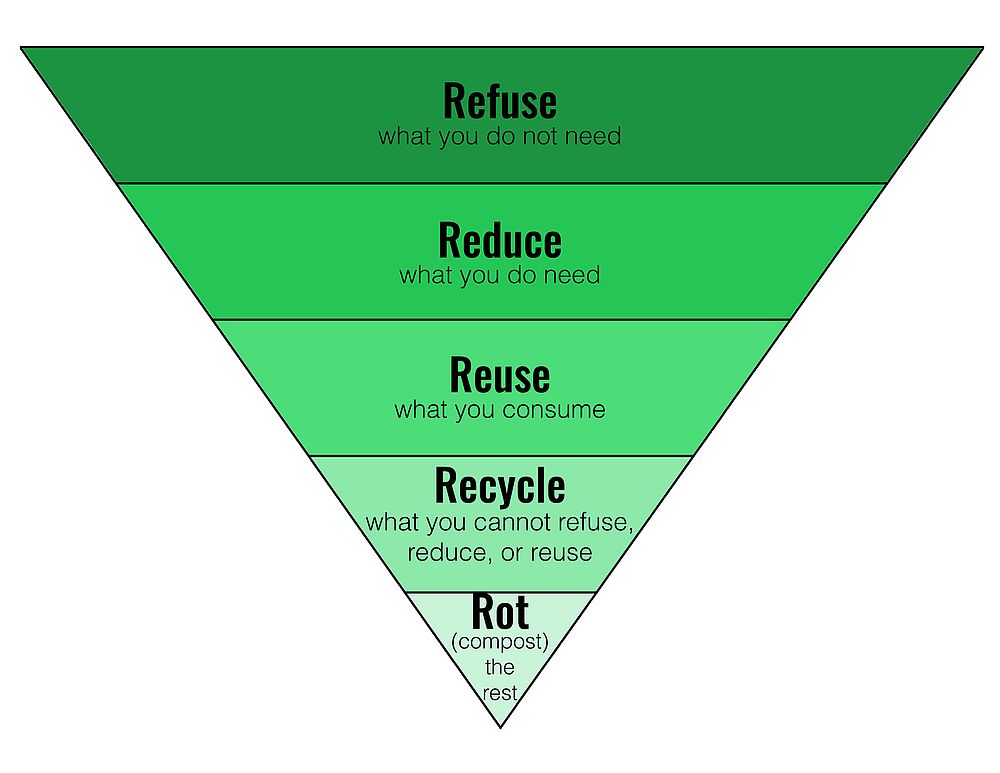
We have taken her hierarchy and localised it for you.
Refuse. The first thing Bea advises is to be uncompromisingly selective in what you are bringing into your house. She describes each purchase as a vote you are throwing. When you support a certain product, you are endorsing the value chain that led that product to you. It goes even further, even the simple act of accepting a product from someone else (like that terribly exciting corporate freebie) is an endorsement. You are saying to the suppliers: there is value in this, make more!
What solutions do you have access to?
- Faithful to Nature is founded on principles of ethical shopping. Their range of products is so comprehensive this may just be a one stop solution for you!
- Conscious Lifestyle Collective partners with small business owners who are committed to both people and the planet. These businesses aim to make a positive impact by offering sustainable products and services.
Reduce. Changing your shopping habits towards conscious awareness of the products you place in your trolley (and the plastics they are wrapped in) is the quintessential step to reducing your waste. Another useful step is to plan out your meals to avoid excessive organic waste.
What solutions do you have access to?
- Read this article: How to Quit Plastic to start your journey to zero-plastic!
- Meal planning apps are an excellent way to get on top of that shopping hassle and simultaneously reduce the amount of waste in both your shopping habits and shopping purchases. Watch this video to hear a review of some of the best meal planning apps available. The apps compared are:
- Yummly
- Meallime
- Prepear
- RecetteTek
- SideChef
- DietWiz
- Paprika
Reuse. Replace all your disposable items (again a very deceiving word) with reusable items. Arm yourself with the basics: water bottles, clothes, glass jars, containers. It is through these items that you will be able to free yourself from the burden of packaging. Bea describes the cheeky interaction of going to stores with bags and tupperwares.
What solutions do you have access to?
- Thrift stores are an amazing way to contribute to the longevity of products and to explore your style and tastes in an affordable manner. Keep your eyes peeled for our up-coming thrift store database.
- The possibilities of reuse are endless. Get creative in repurposing your household items. Get some fresh ideas online.
Recycle. Wherever you cannot refuse, reduce or reuse, it is time to recycle!
What solutions do you have access to?
- Support waste-pickers by separating cardboard, PET plastic and aluminium cans into a separate bag. Waste-pickers are the unsung heroes of recycling in South Africa, and deserve both respect and support in the difficult circumstances of the work they do.
- For other recyclables visit this database to find a recycler near you.
Rot. Organics in landfills contribute to large amounts of methane gas, which contributes to the terrifying GHG cliff-edge we are racing towards. Start to compost your organic waste.
What solutions do you have access to?
- There are hundreds of unique ways to compost your organics. We recommend you consider the Bokashi Composting method. This is a convenient way to store and break-down all kitchen waste, including meat, which can then be buried or added to a compost heap! Check out Bokashi Bran and Earth Probiotic – the two main suppliers of Bokashi starter kits in South Africa.
The directive of adopting a zero-waste lifestyle may seem cumbersome at first glance, but that is only because it is up against decades of consumption-based marketing. The truth is, once you begin to adjust your lifestyle into a more sustainably conscious model, you are revisiting the customs human societies were built on. You will begin to free yourself and your family, and engage in fun new projects together. A really inspiring example of how this practice can prompt a philosophical shift is Kamikatse, a town in Japan that produces no waste at all! Watch this video and feel good about our world!
If you think this way of life is something you would like to try, visit this guide to set you on your path towards zero waste.
